


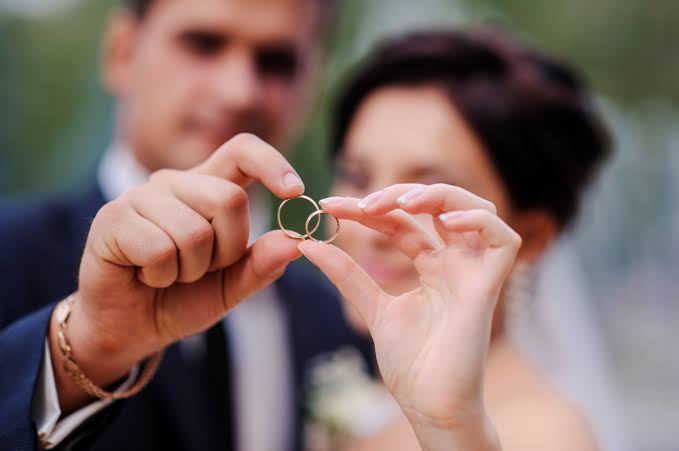
Wedding rings have been a symbol of love and commitment for centuries, but have you ever wondered why they are traditionally worn on the fourth finger of the left hand? While many people simply follow the custom, the tradition has an interesting history rooted in ancient beliefs, religion, practicality, and culture.
Here are five reasons why the fourth finger of the left hand became the traditional home for a wedding ring.
The Ancient “Vein of Love” Belief: One of the oldest explanations dates back to ancient Rome. The Romans believed that a special vein, known as the Vena Amoris or “Vein of Love,” ran directly from the fourth finger of the left hand to the heart.
Although modern science has shown that no such vein exists, the romantic idea captured people’s imagination and became a lasting tradition. For centuries, couples exchanged rings on this finger as a symbol that their hearts were forever connected.
It Symbolizes Love and Commitment: The heart has always been associated with love, affection, and deep emotional connection.
Because the fourth finger was believed to be linked to the heart, placing a wedding ring there became a meaningful symbol of a lifelong promise between two people.
The circular shape of the ring, with no beginning or end, further represents eternal love and an unbreakable bond. Even today, many couples see the ring finger as a daily reminder of their vows and commitment.
Religious Traditions Helped Popularize It: Christian wedding ceremonies also played a major role in making the tradition widespread.
In some traditional ceremonies, the officiant touches the first three fingers while saying, “In the name of the Father, the Son, and the Holy Spirit,” before placing the ring on the fourth finger.
Over time, this practice became part of wedding customs across many countries, reinforcing the symbolism of the left ring finger.
It’s One of the Least-Used Fingers : There’s also a practical explanation. The ring finger is generally less active than the thumb, index finger, or middle finger. Since it isn’t used as often for gripping or everyday tasks, a ring worn on this finger is less likely to get in the way or suffer damage.
This makes it a comfortable and convenient place to wear a piece of jewelry every day.
It’s a Tradition That Has Been Passed Down for Generations: Sometimes, traditions survive simply because they become part of a culture. For generations, parents, grandparents, and newlyweds have followed the custom of wearing wedding rings on the left ring finger. As a result, the practice has become widely recognized around the world as a symbol of marriage.
That said, not every country follows this tradition. In nations such as Germany, Norway, Russia, and Greece, many married couples wear their wedding rings on the right hand instead. Different cultures have different customs, but the meaning behind the ring remains the same.
I think the beauty of the wedding ring tradition isn’t really about which finger you wear it on—it’s about what it represents. Whether it’s on the left hand, the right hand, or worn around a necklace, a wedding ring symbolizes love, loyalty, trust, and the promise two people make to spend their lives together.
The fourth finger of the left hand has become the most recognized place for that promise because of history, culture, and centuries of tradition. Even though the ancient “Vein of Love” has been proven to be a myth, the sentiment behind it continues to resonate with couples around the world.
At the end of the day, it’s not the finger that makes a marriage strong—it’s the love, respect, and commitment shared between the two people wearing the rings.