


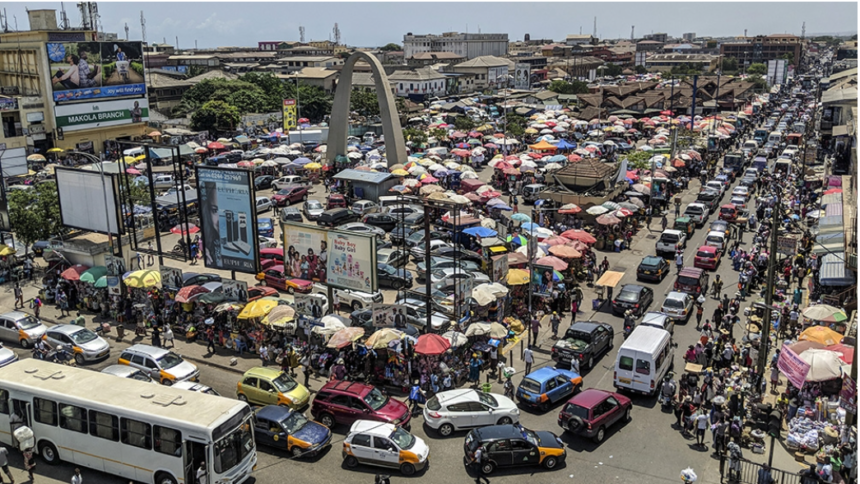
For many people who work in Accra, the morning journey to work can be almost as exhausting as the working day itself.
You can leave home feeling fresh and ready for the day, only to spend a long time sitting in traffic before reaching the office. By the time you arrive, you may already feel tired, frustrated or stressed.
Traffic is part of daily life in Accra, and nobody can completely control what happens on the road. Accidents, road construction, broken-down vehicles, rain and unexpected congestion can quickly change a journey that normally takes 30 minutes into one that takes much longer.
However, there are practical ways to make your daily commute easier.
Here are eight things you can do to reduce the stress of travelling to work in Accra.
1. Leave Home Earlier Than You Think You Need To
One of the simplest ways to reduce morning traffic stress is to give yourself more time.
If you know you have to be at work at 8:00 a.m., don’t plan your journey around arriving at exactly 7:55.
An unexpected delay can easily leave you rushing.
Leaving earlier gives you some breathing room when something goes wrong.
For example, if your normal journey takes 45 minutes, don’t assume that 45 minutes will always be enough. Give yourself additional time for traffic and other delays.
Arriving early can also give you a few quiet minutes to settle down before work begins.
2. Check Traffic Before You Leave
Before starting your journey, check the traffic situation if you have access to a reliable navigation or traffic application.
Google Maps and other navigation tools can help you identify congestion and suggest alternative routes.
However, don’t blindly follow every suggested shortcut.
A route that looks shorter on a map may become slower when many other drivers receive the same suggestion.
Use traffic information as a guide and combine it with your own knowledge of the roads you regularly use.
3. Know More Than One Route to Work
Having only one route to the office can become frustrating when something happens along that road.
Try to learn at least one or two reasonable alternatives.
Your alternative route does not have to be faster every day.
Its value becomes obvious when your normal route is blocked by:
- An accident
- Road construction
- Flooding
- A broken-down vehicle
- Heavy congestion
- A major event
Knowing where you can turn off before reaching a major traffic problem can save you valuable time.
4. Prepare the Night Before
Morning stress often begins before you even get into the car.
If you are searching for clothes, documents, keys, chargers or other essentials while you are supposed to be leaving, you are already starting the day under pressure.
Prepare as much as possible the night before.
You can:
- Choose your clothes
- Pack your work bag
- Prepare important documents
- Charge your phone
- Check your fuel level
- Put your keys in the same place
- Prepare anything you need for the morning
The less you have to think about before leaving home, the easier your morning can become.
5. Don’t Let Every Driver Become Your Enemy
Traffic can bring out frustration.
Someone cuts in front of you, another driver refuses to give way, a taxi stops unexpectedly or a motorist changes lanes without warning.
If you react emotionally to every incident, your journey becomes much more stressful.
You cannot control the behaviour of every driver around you.
Focus on what you can control:
- Your speed
- Your distance from other vehicles
- Your attention
- Your reaction to other drivers
Arriving at work safely is more important than proving that you were right on the road.
6. Give Yourself Something Useful to Do
If you are stuck in traffic for a long period, the journey can feel even more frustrating when you spend the entire time thinking about how long it is taking.
If you are driving, your attention should remain on the road.
But you can still make the commute more productive through safe options such as listening to:
- Podcasts
- Audiobooks
- News updates
- Educational programmes
- Music
If you use your phone for navigation, set everything up before driving rather than constantly handling the phone while on the road.
And never text or browse social media while driving.
7. Prepare for Rainy Days
Rain can dramatically change traffic conditions in Accra.
A journey that is manageable on a normal morning can become much slower when heavy rain begins.
During the rainy season, give yourself additional travel time.
Check the weather before leaving if possible and make sure your vehicle is ready for wet conditions.
If you drive, pay particular attention to:
- Tyres
- Windscreen wipers
- Headlights
- Brakes
- Visibility
Don’t rush simply because you are late.
Wet roads and poor visibility require extra caution.
8. Look After Yourself After a Difficult Commute
Sometimes the traffic will still win.
You may leave home early, choose a good route and do everything right, yet still arrive late because of an accident or unexpected road closure.
Don’t allow one bad journey to ruin your entire day.
Once you arrive, take a few minutes to settle down before jumping into work if your schedule allows.
Drink some water, organise your tasks and take a moment to reset.
The goal is not to eliminate every stressful moment.
It is to prevent the commute from controlling your mood for the rest of the day.
What About Leaving Work?
Traffic stress isn’t limited to the morning.
The evening journey home can also be exhausting, particularly after spending an entire day at work.
If your schedule is flexible, consider whether leaving slightly earlier or later could help you avoid the worst congestion.
Even a small change in departure time can sometimes make a difference.
If you cannot change your working hours, use the same principles:
- Check traffic before leaving.
- Know your alternative routes.
- Stay patient.
- Avoid unnecessary distractions.
- Drive defensively.
A Simple Accra Commute Checklist
Before leaving home, ask yourself:
Have I checked the traffic?
Do I have enough fuel?
Is my phone charged?
Do I know my alternative route?
Have I given myself enough time?
Is the weather likely to affect the journey?
These simple questions can prevent some avoidable problems.
Final Thoughts
You may not be able to control traffic in Accra, but you can control how you prepare for it.
Leaving earlier, checking traffic, knowing alternative routes, preparing the night before and remaining calm around other drivers can make your daily commute less stressful.
Most importantly, don’t allow the pressure to arrive at work on time to make you drive dangerously.
Being a few minutes late is frustrating.
Getting involved in an accident is far worse.
Plan ahead, give yourself enough time and remember that the ultimate goal of every journey is to arrive safely.