


Buying your first car is an exciting milestone. Whether you’re purchasing a brand-new vehicle or a reliable used one, it’s a decision that can have a significant impact on your finances and daily life.
Unfortunately, many first-time buyers make costly mistakes simply because they lack experience. The good news is that these mistakes are avoidable and why we are here to feed you with the right information so that you don’t make those mistakes.
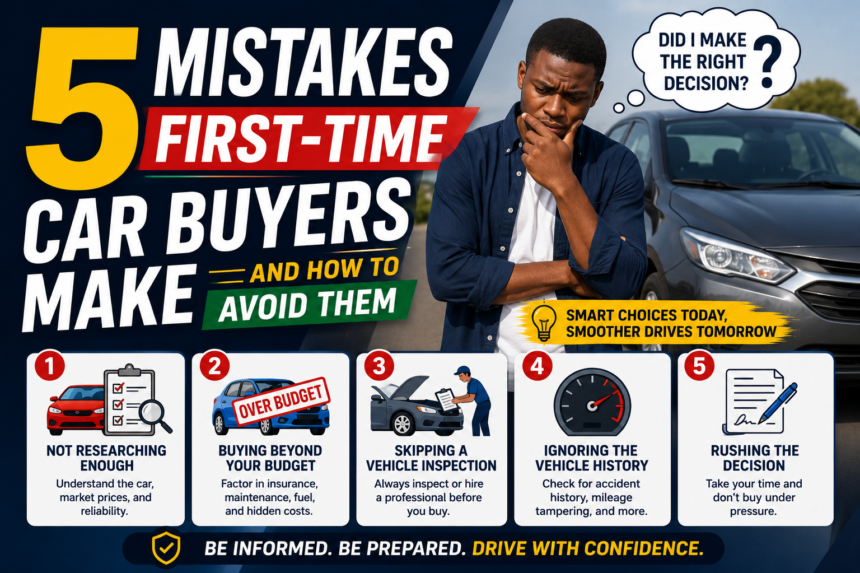
Here are five common mistakes first-time car buyers make—and how you can avoid them.
- Buying Based on Looks Instead of Practicality
It’s easy to fall in love with a salon car or a luxury SUV. However, a vehicle that looks good isn’t always the best fit for your lifestyle. Before making a purchase, ask yourself:
- How many passengers will I carry regularly?
- Will I mostly drive in the city or on highways?
- Is the car fuel-efficient?
- Can it handle Ghana’s road conditions?
For example, if you commute daily in Accra’s traffic, a fuel-efficient hatchback or compact sedan may be a smarter choice than a large SUV. Your first car should solve your transportation needs, not just impress people. There will always be time to upgrade later, so don’t buy a car based on looks.
- Ignoring the Total Cost of Ownership
Many buyers focus only on the purchase price and forget about the ongoing costs of owning a car.
These include:
- Fuel
- Insurance
- Maintenance
- Spare parts
- Roadworthy inspections
- Registration fees
A cheap car that constantly breaks down can end up costing far more than a slightly more expensive but reliable vehicle. Before buying, research how much it costs to maintain the model you’re considering.
- Skipping a Vehicle Inspection
This is one of the biggest mistakes people make when buying a used car. Some vehicles may look perfect on the outside but have hidden mechanical or accident-related issues. Always have the car inspected by a trusted mechanic before paying for it.
The inspection should cover:
- Engine condition
- Transmission
- Suspension
- Brakes
- Electrical systems
- Signs of flood or accident damage
Spending a little on an inspection can save you thousands in future repair bills.
- Not Taking the Car for a Proper Test Drive
A quick drive around the block isn’t enough.
During a test drive, pay attention to:
- Steering response
- Brake performance
- Engine noise
- Gear shifting
- Air conditioning
- Suspension comfort
Drive on different road surfaces if possible to get a better feel for the vehicle. If something doesn’t feel right, don’t ignore it. Let the issue be fixed or ignore purchasing the car.
- Buying Without Comparing Options
Many first-time buyers purchase the first car they like without exploring other options. Take your time to compare:
- Prices
- Mileage
- Features
- Fuel economy
- Maintenance costs
- Resale value
You may discover another model that offers better value for your money. Patience often leads to smarter decisions.
Here are a few extra tips that can make your first car-buying experience much smoother:
- Set a realistic budget before shopping.
- Choose reliability over luxury.
- Check the vehicle’s ownership and documentation.
- Confirm that spare parts are readily available.
- Buy from a reputable dealer or trusted private seller.
- Avoid making emotional decisions.
If I could give first-time buyers just one piece of advice, it would be this: buy with your head, not your heart. Many people dream of owning an expensive or flashy car as their first vehicle, but your first car should be dependable, affordable to maintain, and suitable for your everyday needs.
In Ghana, where fuel prices, maintenance costs, and road conditions can vary, reliability is often more valuable than luxury. A well-maintained vehicle from a trusted brand can serve you faithfully for years while saving you money on repairs and fuel.
Remember, your first car is not your last car. Think of it as a stepping stone that helps you gain driving experience, build financial discipline, and understand vehicle ownership before upgrading in the future. Choosing wisely today can save you significant money, stress, and unexpected repair costs tomorrow.