


The Ghana Armed Forces (GAF) are set to hand over the cleared corridor for the much-anticipated Accra-Kumasi Expressway, marking another important step toward the construction of the major road project.
The development follows months of work by the Armed Forces to clear portions of the route, with the exercise carried out in collaboration with the Ministries of Defence, Finance, and Roads and Highways.
Government officials say the progress puts the project ahead of some earlier expectations and brings Ghana closer to the construction phase of one of the country’s biggest planned road infrastructure projects.
Ghana Armed Forces Clear Route Ahead of Construction
The Ghana Armed Forces have played an important role in preparing the corridor for the proposed expressway.
Earlier in May, the GAF reported that 17.75 kilometres had already been cleared during the mobilisation phase, with equipment deployed to support the exercise.
The latest development represents a significant expansion of that work, with government officials now referring to a cleared corridor of about 176 kilometres.
The handover is expected to allow the next stages of the project to proceed as the government works toward actual construction.
Expressway Could Cut Accra-Kumasi Travel Time
One of the biggest promises attached to the project is a significant reduction in travel time between Ghana’s two major cities.
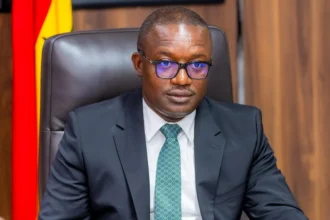
Finance Minister Dr Cassiel Ato Forson has said the completed expressway could cut the journey between Accra and Kumasi by about 50 percent, bringing the travel time down to approximately two hours.
For motorists, commercial transport operators and businesses moving goods between southern and central Ghana, such a reduction could have a major impact.
The Accra-Kumasi corridor is already one of Ghana’s most important transportation routes, carrying large volumes of passengers and commercial traffic.
A modern expressway could therefore improve not only travelling time but also the movement of goods and services between communities along the route.
Project Expected to Create 30,000 Jobs
The government is also presenting the expressway as an employment and economic development project.
According to Dr Ato Forson, the project is expected to create around 30,000 direct and indirect jobs for Ghanaians.
The jobs could come from different stages of the project, including construction, engineering, transportation, logistics, supply of materials and other services connected to the development.
Beyond temporary construction employment, the government also expects improved road connectivity to support businesses and industrial activity along the corridor.
US$1.7 Billion Has Been Secured
Financing has been one of the biggest questions surrounding the proposed expressway.
The government has said US$1.7 billion has already been secured and placed in a dedicated account for the project.
The project is being presented as domestically funded, an approach that the government says will reduce dependence on external financing arrangements.
However, given the size of the project, questions about the overall cost, financing structure and how the funds will be disbursed are likely to remain part of the public discussion.
For a project of this scale, Ghanaians will naturally want to see clear information about how much will be spent and how the government intends to maintain financial discipline throughout construction.
What the Expressway Could Mean for Businesses
A better Accra-Kumasi road connection could have benefits beyond passenger travel.
Kumasi is a major commercial centre and an important link between southern Ghana and the country’s middle and northern regions. Accra, meanwhile, remains the country’s main administrative and economic hub.
Faster movement between the two cities could therefore make it easier for businesses to transport goods, reach customers and manage supply chains.
The government also expects the expressway to support the development of industrial hubs along the corridor.
If properly implemented, this could encourage economic activity beyond Accra and Kumasi rather than concentrating opportunities in the country’s largest urban centres.
Why the Project Has Attracted Mixed Reactions
Despite the potential benefits, the expressway has also generated questions.
Large infrastructure projects in Ghana have historically attracted public debate over costs, timelines, financing and whether promised completion dates will be met.
The Accra-Kumasi Expressway is no different.
Some Ghanaians see the project as a major infrastructure investment that could leave a lasting impact on transportation and economic development.
Others remain cautious, particularly about the eventual cost, the timeline for completion and whether the financing arrangements will remain sufficient throughout the project.
These concerns are reasonable given the scale of the proposed road.
A Project With Long-Term Implications
The proposed expressway is expected to be a major six-lane, access-controlled road connecting Accra and Kumasi.
The full proposed route is around 198 kilometres, while the government has highlighted the approximately 176-kilometre section cleared by the Ghana Armed Forces as part of the preparation work.
That distinction is important because the current clearing exercise should not be confused with the completion of the actual road.
There is still considerable work ahead, including construction, drainage, interchanges, bridges and other infrastructure required to make the expressway fully operational.
My Opinion
I believe the Accra-Kumasi Expressway could become one of the most important infrastructure projects in Ghana if it is completed properly.
Reducing the journey between Accra and Kumasi to around two hours would be a major improvement for ordinary travellers and businesses.
However, the real test will not be the announcement or the groundbreaking ceremony. It will be execution.
Ghanaians have seen major projects announced with ambitious timelines before, so transparency will be important throughout this project.
The government should regularly publish clear updates on construction progress, expenditure, financing and expected completion dates. That would help the public understand how the US$1.7 billion is being used and whether the project is staying on schedule.
If the expressway is delivered to the promised standard, it could become a genuine long-term economic asset for Ghana.
Final Thoughts
The Ghana Armed Forces’ work to clear the route marks another step forward for the Accra-Kumasi Expressway.
With government officials saying US$1.7 billion has been secured and projecting about 30,000 direct and indirect jobs, expectations surrounding the project are understandably high.
The proposed reduction in travel time could also make a meaningful difference to passengers, transport operators and businesses.
But with a project of this size, the focus must now shift from preparation to delivery.
Ghanaians will be watching closely to see whether the project can meet its promised timelines, remain financially transparent and ultimately deliver the faster, safer and more efficient connection between Accra and Kumasi that has been promised.