


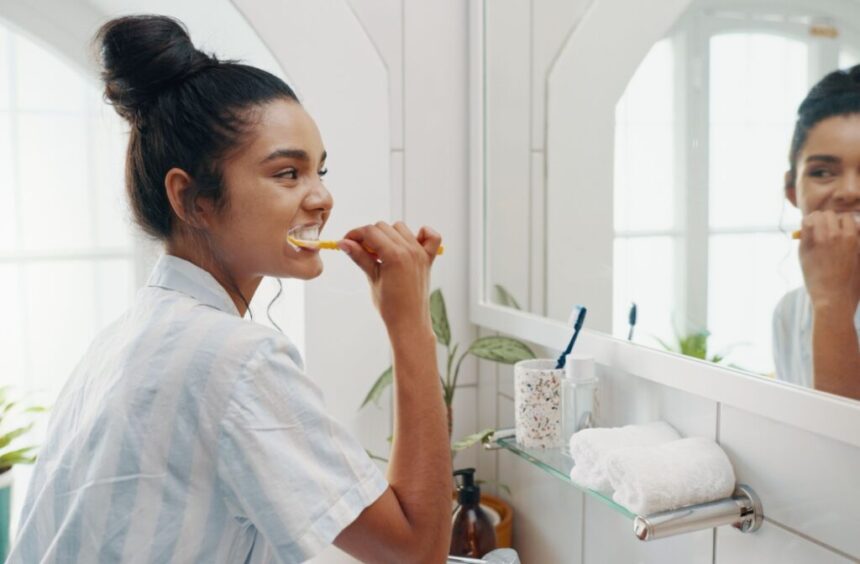
Most people brush their teeth and immediately rinse their mouth with water. While this feels natural, dental experts say the habit may actually reduce the effectiveness of your toothpaste.
Avoiding rinsing after brushing might seem unusual, but it is considered one of the simplest ways to improve oral health.
What Happens When You Rinse After Brushing
Toothpaste contains fluoride, a key ingredient that helps strengthen tooth enamel and protect against decay.
When you rinse your mouth immediately after brushing, much of that fluoride is washed away before it has time to work effectively.
This reduces the protective layer that toothpaste is meant to leave on your teeth.
Why Dentists Recommend Spitting Instead
Dental professionals generally advise spitting out excess toothpaste rather than rinsing with water.
Leaving a small amount of fluoride on the teeth allows it to continue protecting against cavities for a longer period.
Even people who brush regularly may not get full benefits if they rinse right away.
Is It Safe Not to Rinse?
Yes, it is safe — as long as you spit out the toothpaste and do not swallow it.
A thin layer of toothpaste residue on the teeth is harmless and beneficial. While the taste may feel unusual at first, most people adapt quickly.
If You Prefer to Rinse
For those who find it uncomfortable not to rinse, delaying the rinse can still provide benefits.
A simple approach:
- Spit out the toothpaste
- Avoid rinsing immediately
- Wait about 20–30 minutes before drinking water or rinsing
This gives fluoride enough time to strengthen the teeth.
When This Matters Most
Not rinsing after brushing is especially helpful:
- Before going to bed
- For people prone to cavities
- For children learning proper oral hygiene
- For those using fluoride toothpaste
Night-time brushing is particularly important because saliva production decreases during sleep, making teeth more vulnerable to bacteria.
The Bigger Picture: Small Habits, Better Oral Health
Many people focus on brushing twice daily but overlook what happens after brushing.
A simple change like skipping the rinse step can significantly improve the effectiveness of fluoride toothpaste over time.
Better oral care is not always about doing more — sometimes it’s about doing things differently.